
When Is Amazon Prime Day 2026? Dates, Deals, Strategy, and Everything You Need to Know
In This Article
- What Amazon Prime Day actually is
- So when is Amazon Prime Day 2026?
- Why the date might shift in 2026
- How long will Prime Day 2026 last?
- What kind of deals should you expect?
- What should shoppers buy on Prime Day 2026?
- How to prepare for Prime Day 2026
- Prime Day vs. Amazon Big Spring Sale vs. Prime Big Deal Days
- What sellers should know
- Is Prime Day 2026 worth waiting for?
- Final thoughts
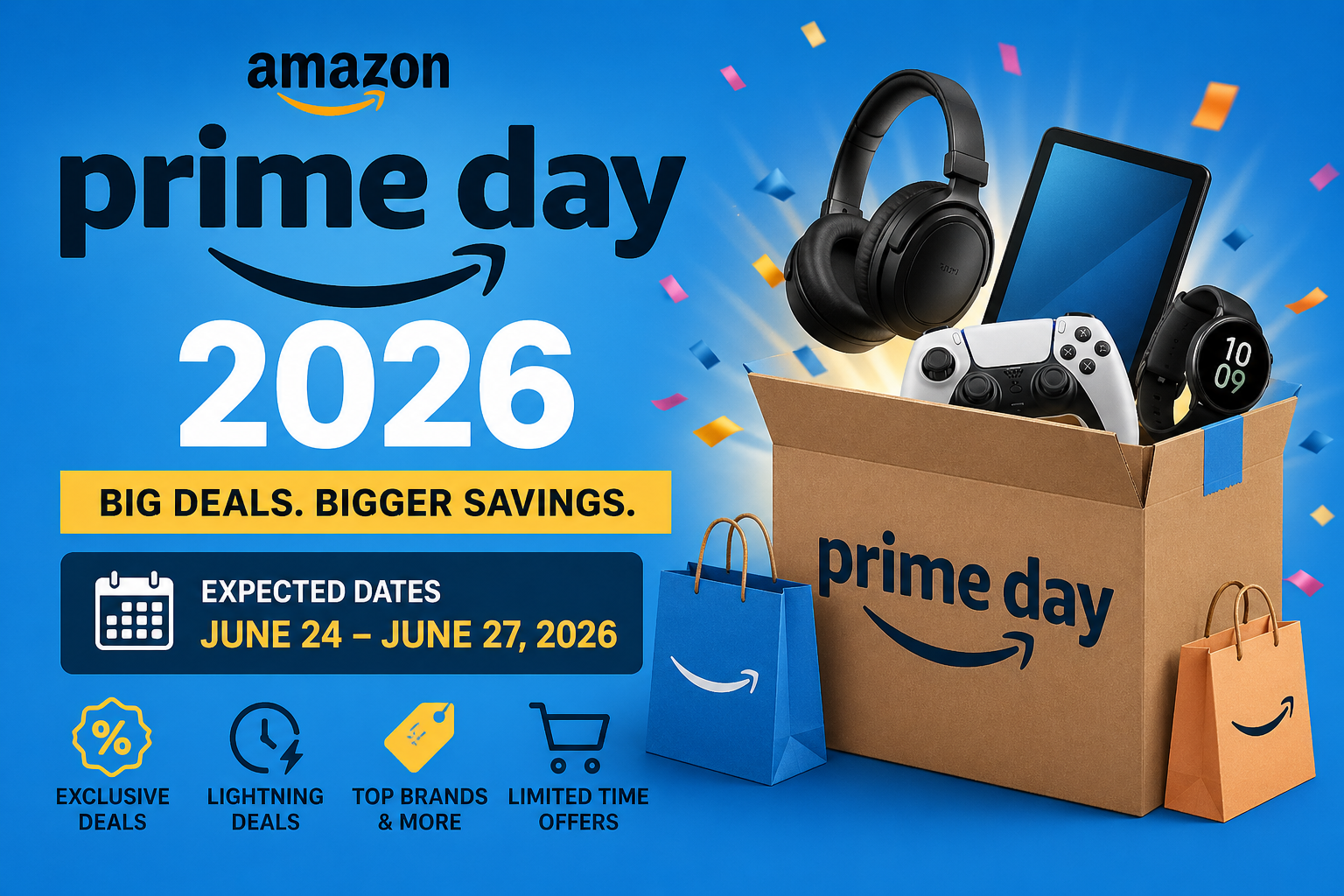
Amazon Prime Day is one of the biggest shopping events of the year, and for millions of people it has become a date worth waiting for. It is the moment when shoppers look for major discounts on electronics, home items, fashion, kitchen products, and Amazon’s own devices. Amazon describes Prime Day as its annual deal event for Prime members, and its 2025 sale ran from July 8 to July 11.
So when is Amazon Prime Day 2026? At the moment, Amazon has not officially announced the exact dates. Current reporting suggests that Prime Day 2026 is expected in late June, although Amazon could still keep it closer to its usual summer timing. That uncertainty is exactly why people are already searching for answers.
What makes Prime Day interesting is that it is not just a sale. It is a huge retail moment that influences shoppers, sellers, brands, and even Amazon’s broader sales calendar. Amazon has already shown that it is willing to move and expand its major event schedule. In 2026, it held its Big Spring Sale from March 25 to March 31, and Amazon also continued its fall Prime-exclusive event tradition with Prime Big Deal Days in October 2025.
This article breaks down what Prime Day 2026 is likely to look like, when it may happen, why the date may shift, what kinds of deals to expect, and how you can prepare so you do not miss the best discounts.
What Amazon Prime Day actually is
Amazon Prime Day is a Prime-member-only shopping event. Amazon says the event is exclusive to Prime members, which means you generally need a membership to access the best deals during the sale. It is one of Amazon’s biggest promotional events of the year, and it often includes discounts across electronics, household goods, beauty products, toys, kitchen items, and Amazon devices.
Prime Day has also become much more than a one-day sale. In recent years, Amazon has stretched the event into longer shopping windows. In 2025, Prime Day ran for four days, from July 8 to July 11, which gave shoppers more time to browse and buy. That trend matters because it suggests that Prime Day 2026 could also be a longer event rather than a short 24-hour flash sale.
The event is important for shoppers because it often produces some of the year’s lowest prices on high-demand items. It is important for sellers because it drives huge traffic and conversion volume. And it is important for Amazon because it reinforces the Prime ecosystem, where shopping, entertainment, and membership benefits all work together.
So when is Amazon Prime Day 2026?
The honest answer is that Amazon has not officially confirmed the exact dates yet. Current reporting suggests that Prime Day 2026 is expected to land in late June, although there is still a chance Amazon could keep it in the July window it used in 2025.
Why does this matter? Because Amazon’s timing is not random. The company uses Prime Day as a strategic retail event, and it often chooses timing that maximizes attention, sales volume, and competitive advantage. Amazon’s 2025 event ran July 8–11, but the early 2026 reporting shows that the company may shift the calendar if it sees a business reason to do so.
There is also one more clue worth paying attention to. Amazon’s seller readiness playbook says Prime-Exclusive Best Deal and Lightning Deal submissions opened on March 24, 2026. That does not reveal the exact public date of Prime Day, but it does suggest that Amazon is already well into planning the 2026 event behind the scenes.
So the practical takeaway is simple: do not wait for a final announcement if you are planning a big purchase. Prime Day 2026 is expected in summer, and the current reporting leans toward late June, but the exact date is still unconfirmed.
Why the date might shift in 2026
Amazon has a lot of reasons to change the timing of Prime Day. One of the biggest is competition. Retailers increasingly run competing sales around the same time, and Amazon may want to move earlier or keep its event longer to stay ahead. Another reason is revenue timing. A late-June event can help Amazon capture spending earlier in the quarter.
There is also a consumer behavior angle. Shoppers today often buy earlier than they used to, especially for back-to-school preparation, home upgrades, summer electronics, and mid-year purchases. A June event may fit better with that pattern and give Amazon more room to drive momentum before the July shopping cycle intensifies. That is why the current reporting about a late-June Prime Day 2026 is so important.
Amazon also keeps expanding its promotional calendar. The Big Spring Sale ran from March 25 to March 31, 2026, and Prime Big Deal Days returned in October 2025. That tells us Amazon is not relying on one giant event anymore. Instead, it is building a year-round rhythm of shopping moments, which makes Prime Day part of a larger promotional strategy rather than a standalone event.
How long will Prime Day 2026 last?
Amazon has not confirmed the duration of Prime Day 2026, but recent history gives us a strong clue. Prime Day 2025 lasted four days, from July 8 to July 11. That was a big change from the early years when Prime Day was much shorter.
Because Amazon extended the event in 2025, many shoppers and sellers expect a similar multi-day format in 2026. A longer event gives Amazon more chances to surface deals, more time for shoppers to shop, and more opportunities for sellers to convert traffic. It also reduces the pressure of having to buy everything in one rushed session.
In practical terms, shoppers should prepare for a sale window that could last anywhere from two to four days. The safest assumption is that Prime Day 2026 will not be a one-hour flash sale or a one-day discount event. It will likely be a large, multi-day shopping event with lightning deals, featured offers, and category-wide promotions.
What kind of deals should you expect?
Prime Day is best known for deep discounts on Amazon devices and popular consumer products. The event typically covers electronics, home goods, kitchen appliances, fashion, toys, and more. Amazon’s own Prime Day and customer-service materials describe it as an event with deals across top brands and multiple categories.
The strongest deals usually appear in the same categories every year. Amazon devices are often some of the best-value buys because the company likes to push Echo speakers, Fire TV products, Ring cameras, and Kindle devices during major sale events. Tech products such as headphones, laptops, tablets, and smart-home accessories also tend to attract heavy discounts.
Home and kitchen items are another big category. During major Amazon events like the Big Spring Sale, Amazon highlighted home, apparel, outdoor, and tech deals, which shows how broad its promotional strategy has become. Prime Day is likely to follow the same pattern, with many product categories competing for attention at once.
What should shoppers buy on Prime Day 2026?
If you are a shopper, the best strategy is not to buy everything blindly. Prime Day is a good time to shop for items that are genuinely expensive, frequently discounted, or useful year-round. Those usually include smartphones, laptops, earbuds, smart speakers, robot vacuums, tablets, monitors, and Amazon devices.
The smartest purchases are usually the ones you have already researched before the sale begins. That way, you can tell whether the discount is real or just marketing. A lot of Prime Day shoppers get excited by flashy percentage-off tags, but the best buyers compare current prices with past pricing and competitive retail offers. That is how you avoid overpaying during a sale that looks better than it really is.
You should also pay attention to limited-time lightning deals. Amazon has long used time-sensitive promotions to create urgency during Prime Day. If a product you want is in a category that usually sells fast, it is usually better to buy early in the event than to wait for the final day.
How to prepare for Prime Day 2026
The best Prime Day shoppers do their homework before the sale starts. First, make sure your Prime membership is active if you want access to Prime-exclusive offers. Amazon’s customer service information makes clear that Prime Day is designed as a Prime-member shopping event.
Second, build a wishlist ahead of time. If you already know what you want, you can monitor the pricing more carefully when Prime Day starts. Third, compare prices ahead of time so you know whether a “deal” is actually a good discount or just normal retail pricing dressed up as a sale. Amazon’s growing mix of deal events, including Big Spring Sale and Prime Big Deal Days, makes this especially important because shoppers now see multiple Amazon promotions throughout the year.
Fourth, act fast on limited-stock items. Prime Day deals can disappear quickly, especially on electronics and Amazon-branded products. Fifth, use price-tracking tools if you want to be extra careful. The more you know before the event starts, the less likely you are to miss a real bargain. That advice is especially useful in a year like 2026, when Amazon’s schedule appears more active than ever.
Prime Day vs. Amazon Big Spring Sale vs. Prime Big Deal Days
Amazon is no longer a one-event retailer. It now uses several major sales moments throughout the year. In 2026, the Big Spring Sale ran from March 25 to March 31, and Amazon also continued its Prime Big Deal Days event in October 2025. Prime Day remains the biggest of those events, but it now exists inside a broader retail calendar.
That matters for shoppers because it means there are more chances to save, but it also means Prime Day is not the only event worth watching. Some products may already be discounted during Big Spring Sale or Prime Big Deal Days, which can reduce the pressure to buy at Prime Day if you already found a good price earlier in the year.
For sellers, it means planning inventory and deal strategy throughout the year. Amazon’s March 24, 2026 seller readiness timeline shows that deal submissions for Prime Day begin well in advance. Sellers who wait until the last minute are less likely to get the best placement or enough inventory in place for the event.
What sellers should know
If you are a seller, Prime Day 2026 is not just a sales event. It is a logistics and planning event. Amazon’s readiness playbook shows that deal submissions can open months ahead of the event, which means sellers need to plan inventory, pricing, and promotions early.
The reason this matters is simple: if your inventory is not ready, you cannot take advantage of the traffic spike. Prime Day creates huge demand, but only sellers who are prepared can really benefit from it. That means product listings should be optimized, ad campaigns should be ready, and stock levels should be monitored closely. Amazon’s readiness guidance is a strong signal that the company expects sellers to treat Prime Day as a major operational milestone, not a spontaneous event.
This is also why Prime Day has become so important for third-party merchants. It gives them access to one of the largest shopping audiences of the year, but only if they plan early enough to participate properly. The March 2026 seller timeline is a clear reminder that Amazon Prime Day is built months in advance behind the scenes.
Is Prime Day 2026 worth waiting for?
Yes, if you are planning to buy expensive or discretionary items. Prime Day continues to be one of the most important shopping events of the year, and Amazon’s continued expansion of its deal calendar suggests it will remain a major sales moment in 2026. Because Amazon has not yet officially confirmed the exact date, waiting for the event only makes sense if the product you want is not urgent.
If you need something immediately, it may be better to buy it when you find a good price rather than waiting for a sale that is still not officially dated. But if your purchase is flexible, Prime Day can absolutely be worth waiting for, especially for tech, home, and Amazon-branded items. Amazon’s own history of major summer and fall events shows that big discounts are part of its retail identity now.
Final thoughts
Amazon Prime Day 2026 is expected to be one of the biggest shopping events of the year, but the exact date has not been officially confirmed yet. Current reporting points to late June 2026, though Amazon’s past pattern suggests the sale could also remain in the summer window. Prime Day 2025 ran July 8–11, Amazon’s seller readiness timeline for 2026 was already active in March, and Amazon’s broader promotional calendar now includes Big Spring Sale and Prime Big Deal Days too.
About The Author


Hamza Malik
Keep Reading
When Is Amazon Prime Day 2026? Dates, Deals, Strategy, and Everything You Need to Know
Amazon Prime Day is one of the biggest shopping events of the year, and for millions…